

Memorial Day weekend fun: Northwest Folklife Festival at Seattle Center
Every Memorial Day weekend, something magical happens at Seattle Center.
Fiddles ring out from Bluegrass Hill. Drummers thunder from the International Fountain courtyard. West African dancers share a stage with Scandinavian folk singers, and bluegrass pickers trade licks with Middle Eastern oud players. It's the Northwest Folklife Festival — and the best way to get there is on Sound Transit.
A festival born from the spirit of the Northwest
The Northwest Folklife Festival has deep roots in the Pacific Northwest's identity.
Founded in 1971 by a coalition of the Seattle Folklore Society, the National Park Service, the National Folk Festival Association (now the National Council for the Traditional Arts), and the City of Seattle, the festival was built on a beautifully simple idea: give everyday people a stage. The goal was to showcase what people in the region "make for their own use and do for their own entertainment."
The first festival opened in May 1972 on a shoestring budget — just $6,000 — organized in less than a month, presenting over 380 performers and craftspeople. And yet, that first weekend drew a remarkable 123,000 visitors. The next year, an estimated 225,000 showed up. The formula, it turned out, was irresistible.
What made Folklife different from other music festivals was its deliberately anti-commercial, anti-hierarchical spirit. There were no headline acts, no auditions, and no admission fee.
Co-founder Phil Williams, a classically trained musician turned folk music devotee, described the vision simply: a chance to present things that "people could actually do themselves." Festival organizers didn't audition a single performer that first year — if you played, you were welcome.
Over the decades, Folklife grew into something extraordinary. Today it is widely recognized as the largest community-powered folk festival in North America, drawing upwards of 250,000 visitors each year.
The festival's Cultural Focus program — a "festival within a festival" highlighting a specific Pacific Northwest community — has spotlighted Arab-American life, Bulgarian culture, maritime traditions, hip-hop, and this past year, the Japanese concept of Ikigai ("a life worth living"). More than 4,000 performers take the stage across 20-plus stages, joined by 500 volunteers and 200 food and craft vendors.
Step 1: Catch an ST Express bus or Link light rail to Westlake Station
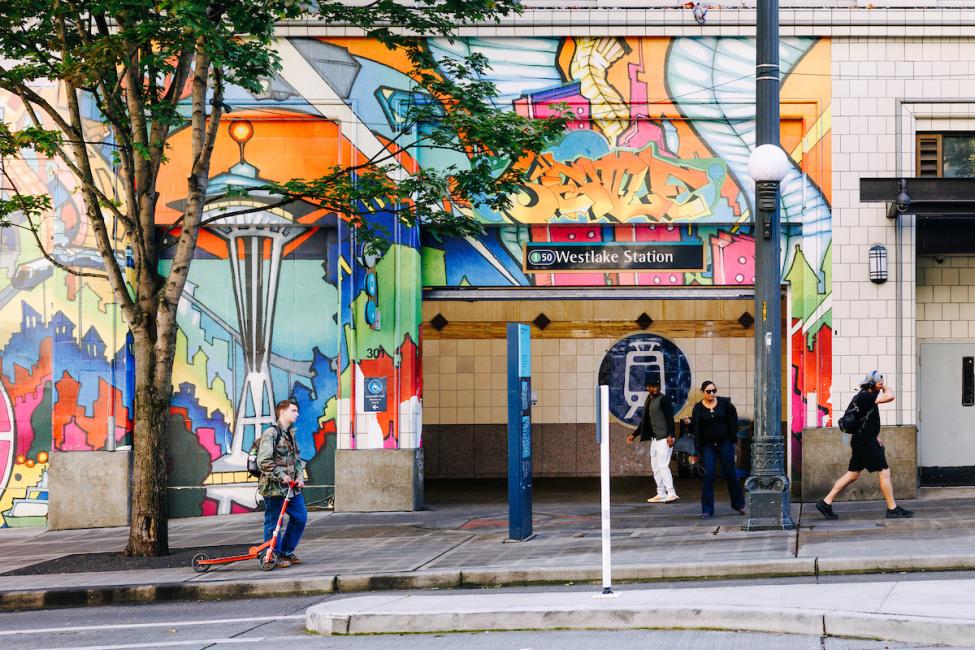
No matter where you're coming from in the region, Sound Transit connects you to the heart of downtown Seattle.
From the South (Federal Way, SeaTac, Tukwila, Rainier Valley): Hop on the 1 Line Link light rail and ride north to Westlake Station in downtown Seattle. Trains run every 8 minutes during peak periods, making it easy to time your trip.
From the East (Bellevue, Redmond, Issaquah): Take the 2 Line Link light rail, which connects the Eastside directly to downtown Seattle, or ride an ST Express bus into downtown. The 2 Line runs every 8–10 minutes during the day.
From the North (Lynnwood, Shoreline, Mountlake Terrace, Everett): Board a 1 Line train or an ST Express bus headed south to Westlake Station.
From the South/Pierce County (Tacoma, Lakewood, Puyallup): ST Express buses serve downtown Seattle from the south end of the region, connecting you to the light rail network.
Your destination in all cases is Westlake Station, located beneath Pine Street between 3rd and 6th Avenues in downtown Seattle. It's the busiest Link station in the entire system — and for good reason.
Step 2: Transfer to the Seattle Monorail
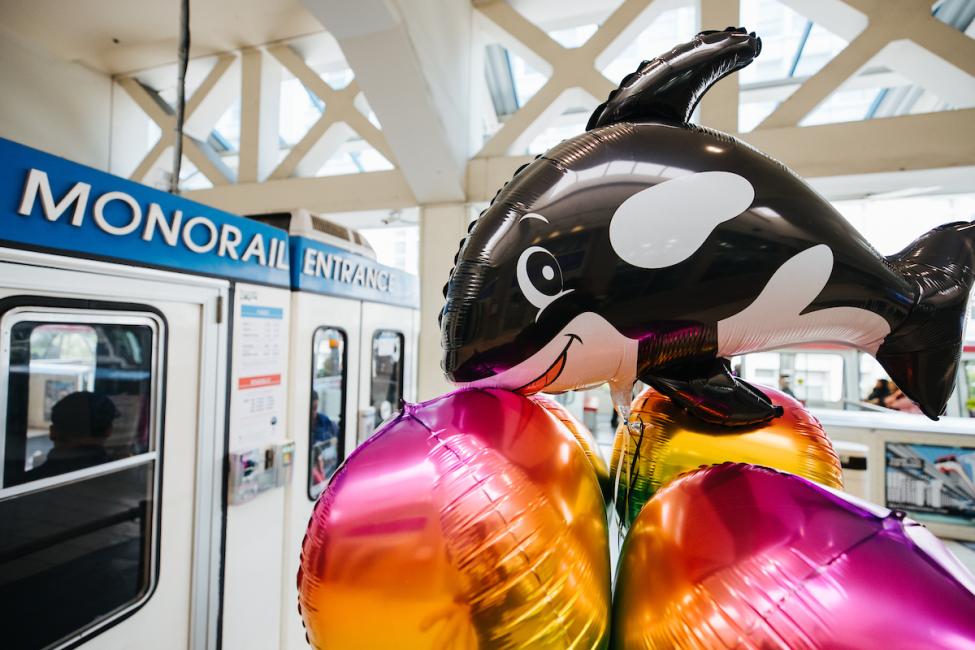
Here's where your trip gets its own touch of history. From Westlake Station, you're steps away from one of Seattle's most beloved landmarks: the Seattle Monorail.
Follow the signs for Exit A2 toward 5th Avenue & Pine Street. Take the elevator — look for the one marked "MONORAIL" — or climb the stairs up to the third floor of Westlake Center mall. There, you'll find the Monorail boarding platform, ticket machines, and fare gates.
The Monorail whisks you directly from Westlake Center to Seattle Center in under two minutes — a breezy elevated glide over the streets of Belltown that's a mini-attraction in itself. You can pay with your ORCA card or purchase a ticket at the vending machines (credit/debit cards accepted; no cash).
Built for the 1962 Seattle World's Fair — the same visionary event that gave us the Space Needle — the Monorail was once a glimpse into the future of urban transit. Today, it remains a cherished piece of Seattle's soul, and it deposits you right at Seattle Center's front door, Space Needle gleaming overhead, ready to welcome you to the festival.
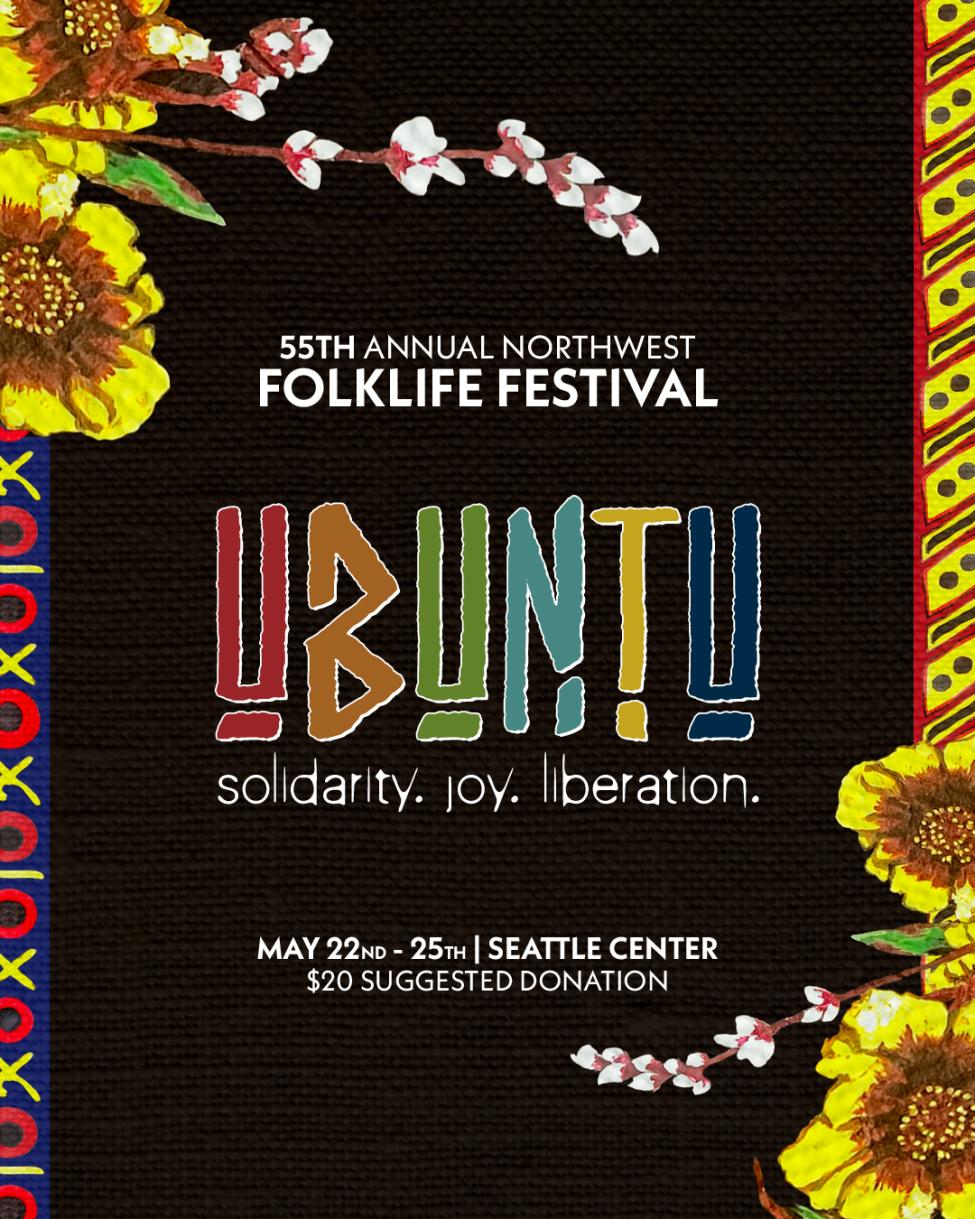
Step 3: Dive into the festival
When you step off the Monorail at Seattle Center, the festival opens up in every direction.
Follow the sound of banjos to Bluegrass Hill. Wander toward the International Fountain, where performers from across the globe share stages just steps from the water and sun. Browse the Maker's Space for hands-on craft demonstrations, check out "Threads of the People" — the festival's folk-meets-fashion showcase — or simply find a patch of grass and let the music wash over you.
Food and craft vendors line the grounds, and the giant fountain at the center of Seattle Center transforms into an informal water park on warm days. Bring a blanket, bring the family, bring your dancing shoes.
Plan your trip
May 22–25, 2026 (Memorial Day Weekend)
Free admission (suggested donation: $20/day)
Getting there:
Link 1 Line (Lynnwood ↔ Federal Way) → Westlake Station
Link 2 Line (Redmond ↔ Seattle) → Westlake Station
ST Express buses from throughout the region → Downtown Seattle
Westlake to Monorail: Exit toward 5th Ave & Pine St → Elevator to 3rd floor of Westlake Center → Board the Monorail → Arrive Seattle Center in under 2 minutes