Your express stop for the latest Sound Transit news

Pinehurst Station public art: Locally made, artist-led
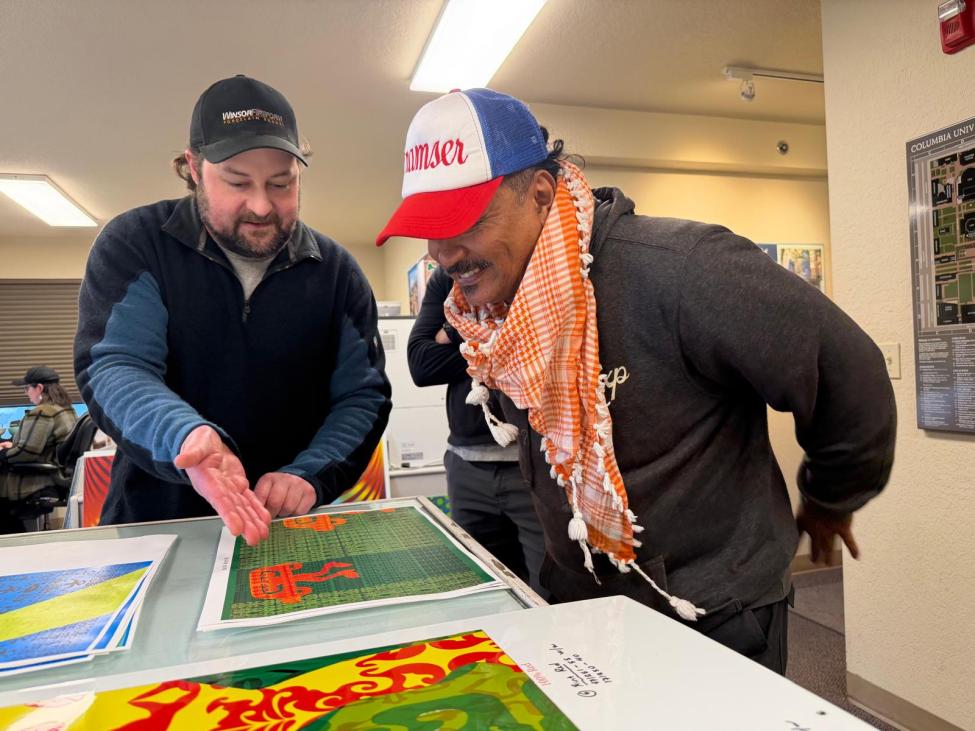
A world-class fabricator in Tumwater worked with artist Romson Bustillo to test colors and finishes to bring his vision to life at Pinehurst Station.
Artwork displayed at Sound Transit Link light rail stations is a physical representation of an artist’s ideas, emotions, and experience.
Material choices — color, finish, and texture — are part of the artistic expression and must stand up to weather, wear, and daily foot traffic and use.
For Pinehurst Station, Sound Transit is delivering the artwork through a design-only approach.
'Working with Romson from the early stages of the 130th Station project was a rare opportunity to push the boundaries of what we could achieve with porcelain enamel, and his willingness to explore ambitious ideas while understanding when we needed to compromise ultimately resulted in a truly striking and one-of-a-kind installation.' — Dave Ellerbrock, Winsor
In plain terms, that means Romson Bustillo leads the artistic design, and a specialty fabricator builds the physical artwork and supports installation. This approach helps ensure the work meets technical and durability requirements while keeping the design rooted in the artist’s vision.
Bustillo emphasizes that “design-only” does not mean the work is hands-off. The design process still requires deep attention to materials, the station context, community voice, structural parameters with the contractor, and how riders move through the station.
Bustillo worked closely with the project fabricator, Winsor Fireform (located in Tumwater) and notes that clear communication is what makes the collaboration successful.
Through this collaboration, Bustillo could show his breadth of skill and practice to layer materials like tile with more traditional art making like printmaking.
Early in the process, the team reviewed color possibilities at the shop to establish shared expectations. As production approached, Bustillo said seeing and approving fired samples was critical — especially confirming that the final color and finish matched the experience he wanted to capture.
Throughout the project, durability, scale, and rider experience were treated as interdependent to ensure that the completed work remains visually expressive while staying structurally sound over time.