Your express stop for the latest Sound Transit news

Eight things to know about the updated ST3 System Plan
Find out what this milestone decision means for you and how Sound Transit will keep advancing voter-approved transit projects.
Yesterday, the Sound Transit Board of Directors adopted an updated ST3 System Plan to guide the agency’s next phase of voter-approved transit expansion across the region.
This was a critical step forward in the Enterprise Initiative, the comprehensive effort Sound Transit launched a year ago to tackle rapidly rising capital and operating costs and affordably deliver the objectives of the ST3 program.
Since voters approved the ST3 ballot measure in 2016, we’ve seen unprecedented inflation, and that’s had an outsized effect on transportation megaprojects like light rail expansions and state and federal highways.
In the past six years alone, the inflation rate was equal to the previous 20 years — meaning roughly two decades of expected cost increases packed into just six years. Coupled with cost pressures related to transit operations, this historic inflation has led to Sound Transit’s estimated $34.5 billion funding gap over the next 20 years.
Despite the challenging and unprecedented set of circumstances contributing to the funding gap, Sound Transit and the Board of Directors are committed to delivering projects efficiently in all corners of Central Puget Sound.
Updating the System Plan helps to close the funding gap, setting a sustainable trajectory for delivering the objectives of the ST3 plan. The newly adopted plan incorporates cost savings from across the agency, including system and project planning, capital construction, service operations, and system maintenance; as well as new revenue sources and financial policies to set the agency on a sustainable path going forward.
So, what does this update mean for the transit projects you care about?
Here are eight important things to know:
1. Sound Transit is committed to delivering the objectives of ST3.
First and foremost, the updated System Plan keeps projects moving.
While the funding gap we projected wouldn’t impact the agency until about a decade from now, Sound Transit is required to proactively update the System Plan when its associated Long-Range Financial Plan is out of balance by more than 5%.
This update prioritizes building the projects that are ready and advancing planning for projects further down the pipeline so the agency can maximize progress within available resources.
At the same time, we’re committed to growing those resources, and to finding further cost savings, in order to regularly bring partially funded or deferred projects back into the plan.
2. All light rail projects are moving forward.
The updated plan includes full funding to complete Link extensions to West Seattle, Everett, the Tacoma Dome, and Tacoma Community College (now forecasted for 2043), as well as the 4 Line between South Kirkland – Issaquah (now 2050).
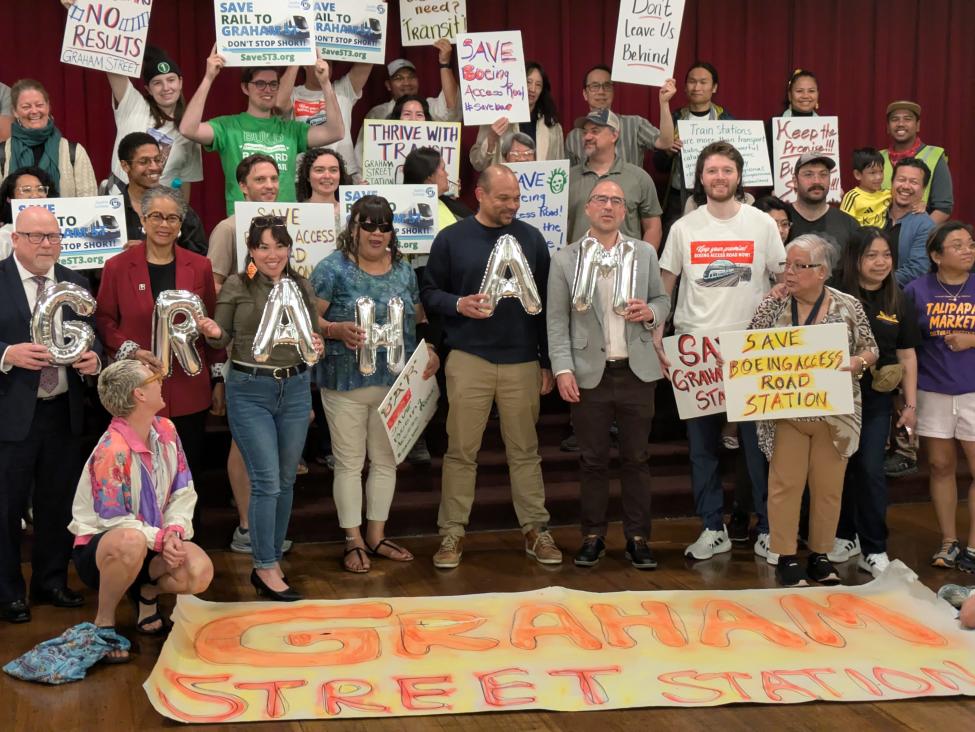
In partnership with City of Seattle and King County, the updated plan also fully funds the Graham Street Infill Station. The plan also funds the design and construction of an initial segment of the Ballard Link Extension to Seattle Center.
Other Link projects — like Boeing Access Road Station — or segments within projects — like the remainder of the Ballard Link Extension — are partially funded with dollars to bring the projects through the “final design” phase. This ensures that the projects can continue to find cost savings and are in a ready position to be fully constructed as new or expanded financial capacity becomes available.
The System Plan also identifies partial funding for key Sounder projects, like additional S Line trips, plus planning for an extension to DuPont.
While completing construction on these projects isn’t fully affordable within projected resources, that doesn’t mean pausing or slowing our momentum; we’ll continue advancing planning and design and identifying cost savings on these crucial projects to keep them moving forward.
Head to the Achieving long-term affordability section of our website for a full breakdown of all project designations adopted through the updated ST3 System Plan.
3. Advancing design is the best way to find project cost savings.
As light rail projects go through planning and early design, agency staff study a huge variety of potential locations and approaches. Moving projects beyond these phases allows engineers to transition their focus from what we should build to how.
That’s where cost saving opportunities and efficiencies emerge, and why the updated System Plan will fund all light rail projects through final design.
The West Seattle Link Extension, for example, is the next ST3 light rail project preparing to break ground, and over the past year agency staff have been able to identify approximately $2.2-$2.6 billion of possible cost savings, and the potential for more.
Cost savings can be found through a variety of things like refining or standardizing station designs, adjusting the light rail guideway, and reconfiguring trackwork.
4. We’ll continually focus on bringing projects back into the plan.
To navigate financial constraints and keep Sound Transit’s Long-Range Financial Plan affordable, the updated System Plan identifies projects that need to secure additional funding before completion — like the remainder of Ballard Link, from Seattle Center to Market Street, and Boeing Access Road Station.
This category also includes key Sounder projects, like the remainder of additional S Line trips and final design and construction of the DuPont extension.
To ensure consistent, maintained focus on these types of projects, the Board directed Sound Transit staff to develop and implement a new adaptive program management plan and project delivery framework by the end of 2026.
This approach will formalize specific activities and accountabilities to help the agency take advantage of cost savings opportunities as staff identify them, accelerate project delivery, and develop additional financial resources to bring currently unaffordable projects back into the delivery pipeline.
Specifically, the Board directed Sound Transit staff to accelerate cost savings and project delivery work, and develop alternative financing and delivery options for Boeing Access Road and Ballard Link Extension projects, as well as pursuing additional financial capacity through public and private sector partnerships, value capture programs, securing federal grant revenue, additional low cost federal loans and pursing the 75 year bond bill.
You’ll hear more about this new programmatic approach in the months ahead as staff develop a plan and share it with the Board.
5. Some projects are deferred until additional funding can be identified...
The reality is that some projects, like additional parking, roadway improvements, and Sounder S Line projects (such as train platform extensions) aren’t currently funded in the agency's Long-Range Financial Plan.
If additional funding from other parties becomes available for these projects, the Board may allocate agency resources to advance delivery.
6. …And a new regional parking fund will help explore more innovative parking options.
In response to the above, the Board’s action also established a Regional Parking Fund to support cost-effective and innovative investments in station access and parking. The Pierce, Snohomish, and East King County subareas within the Sound Transit district will fund it equally, and it will be allocated equally to improvements in those subareas.
Sound Transit’s CEO is directed to administer the fund to incentivize public-private and public-public partnerships, shared parking arrangements, and other creative approaches to improve transit access.
7. Public feedback and priorities informed the System Plan update.
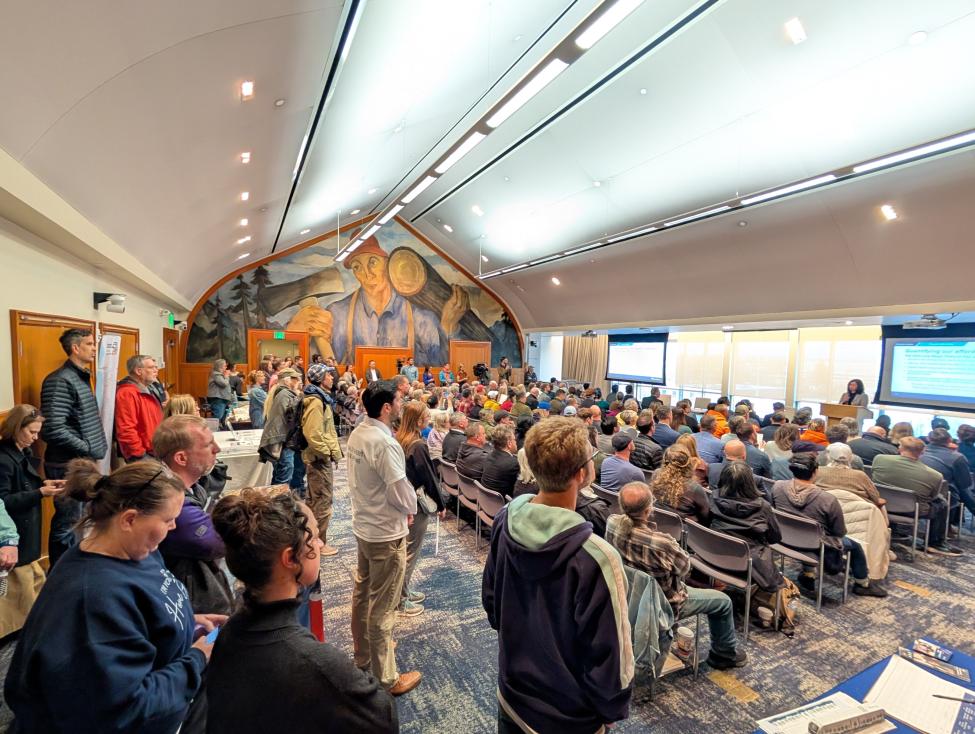
To inform Board decision-making, Sound Transit staff have been seeking public feedback through a range of in-person and online outreach over the past few months.
Across more than 20 community events, eight town hall meetings, a survey that garnered more than 17,000 responses, and other engagement channels and activities, we heard broad and strong support for Sound Transit’s mission across the region. We thank our riders, partners, voters, and taxing district residents for their engagement in the process.
Check out our engagement summary blog to learn more about our survey findings and other public feedback.
8. Our work continues.
Updating the System Plan is a big step toward the agency’s ultimate objective for 2026: finalizing an affordable Long-Range Financial Plan.
Going forward, we’ll continue looking for additional cost savings and ways to increase our financial capacity so we can deliver as much of ST3 as quickly as possible.
That will include aggressively competing for federal and state funding, pursuing additional legislative tools to increase available debt and bonding capacity, and partnering with local jurisdictions to improve permitting and construction to accelerate timelines.
In the process, we’re also committed to timely and meaningful engagement – providing you with updates on progress and opportunities to engage as projects and strategies advance. Your input will inform the agency’s planning, delivery and financial strategies.
As we roll out more specific details on projects affected by the System Plan update and opportunities to engage, be sure to sign up for project updates, follow Sound Transit on social media, and stay tuned to The Platform blog.