Your express stop for the latest Sound Transit news

History of SR-522
A corridor with a rich past is preparing for its next era of transit with Stride.
At Sound Transit, we are always thinking about the future. What is the next Link expansion? How are we better connecting communities to our system? How are things in the region changing and how can we plan to meet those evolving needs?
Stride S3 is a part of that future. When it launches, Stride S3 will be State Route 522’s newest transit and travel choice. But did you know there is over a centuries’ worth of transit history along Lake Washington’s north shore?
In fact, the north shore of Lake Washington has been the traditional homelands of Indigenous communities since time immemorial. The “s-tah-PAHBSH, also known as the '’willow people” lived along the shores.
These communities navigated the north shore with canoes and other watercraft, fished the nearby creeks and Lake Washington, traveled between settlements, and engaged in all manners of exchange.
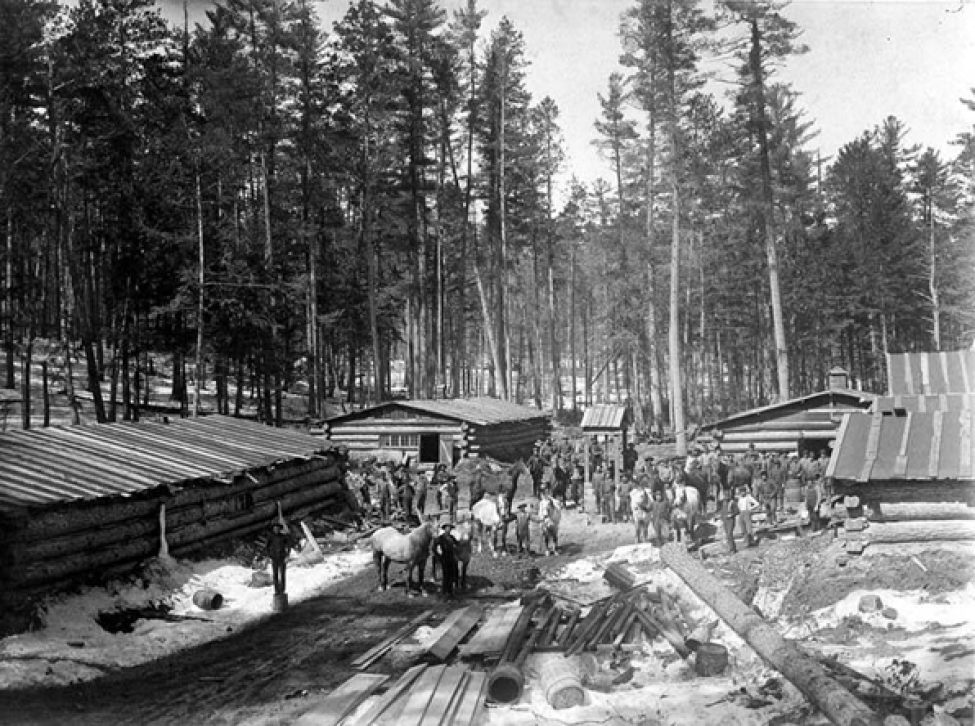
When colonization and industrialization reached the area in the late 19th century, new demands for transportation appeared. Mills, mines, logging sites, farms, and other commercial enterprises emerged and required new modes of transportation to move their materials, products, and people.
Railroads were the choice transit mode of the era. In 1887 the Seattle, Lake Shore, and Eastern Railway reached Bothell.
However, the rail era was short-lived. By the early 20th century, the rise of the automobile replaced the railway as the preferred travel mode for the growing towns along the north shore of Lake Washington.
By 1913, the first county road connected Bothell and present-day Lake Forest Park. Soon after, bus service began, offering locals a transit choice that linked the north shore communities and provided a connection to Seattle.
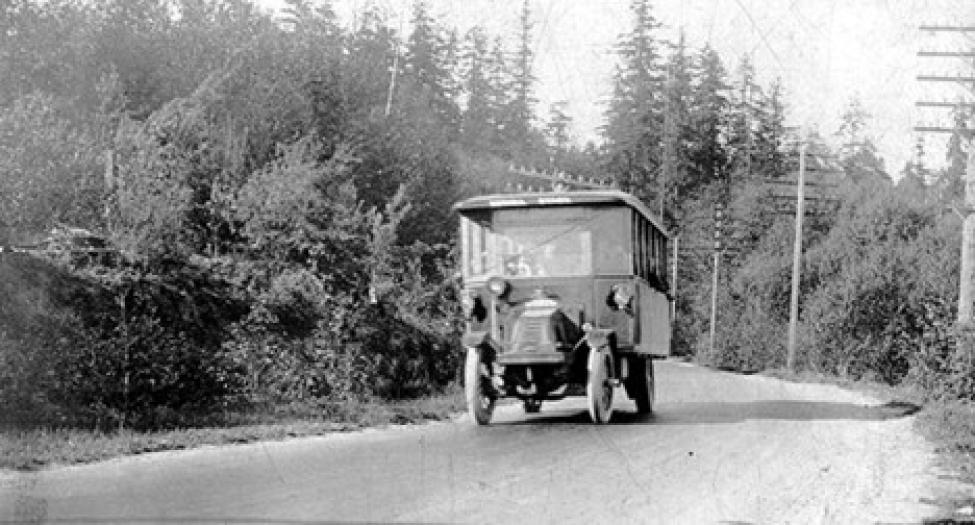
In the decades that followed, the rise of private car ownership began to reshape travel patterns in the region. There were still local transit options during this time, but fast, reliable service connecting the north shore communities to the broader region remained inadequate.
In the late 20th century, the greater Puget Sound region experienced tremendous population growth, much of which took place in the north shore communities. As more people took residence in this area, the lack of sufficient regional transit only become more clear.
In 1996, voters responded to the issue by approving the Sound Transit system. In the following years, Sound Transit provided temporary service to fill the transit gaps. For example, Sound Transit launched the ST Express 522 bus route, connecting Woodinville to downtown Seattle. This route has been a critical connector along the north shore for the past three decades, carrying thousands of travelers per day.
But the public was not completely satisfied. After another 20 years of sustained population growth, voters doubled down on transit and approved the ST3 package, setting the stage for the next era in transit for the north shore communities and SR-522.
Sound Transit’s Stride bus rapid transit (BRT) is part of the ST3 package. When it launches in 2028, Stride S3 will connect communities in Bothell, Kenmore, Lake Forest Park, north Seattle, and Shoreline to the broader regional transit system.
Arriving every 10 to 15 minutes, 17+ hours a day, the new electric battery-powered busses will utilize dedicated lanes and prioritized signals at key intersections to cut travel times and provide a more reliable transit option.
The cities along the north shore continue to grow, and more people are moving to the area, adding more cars (and traffic) to the roads. As communities change, so must our transit solutions. Stride is proud to be a part of the next chapter in the long and storied past of the communities along SR-522.