Stride S1 Line
Project map and summary
Project updates
This project is not affected by the Enterprise Initiative and is advancing as planned.
Get the latest on this project in your inbox.
Overview
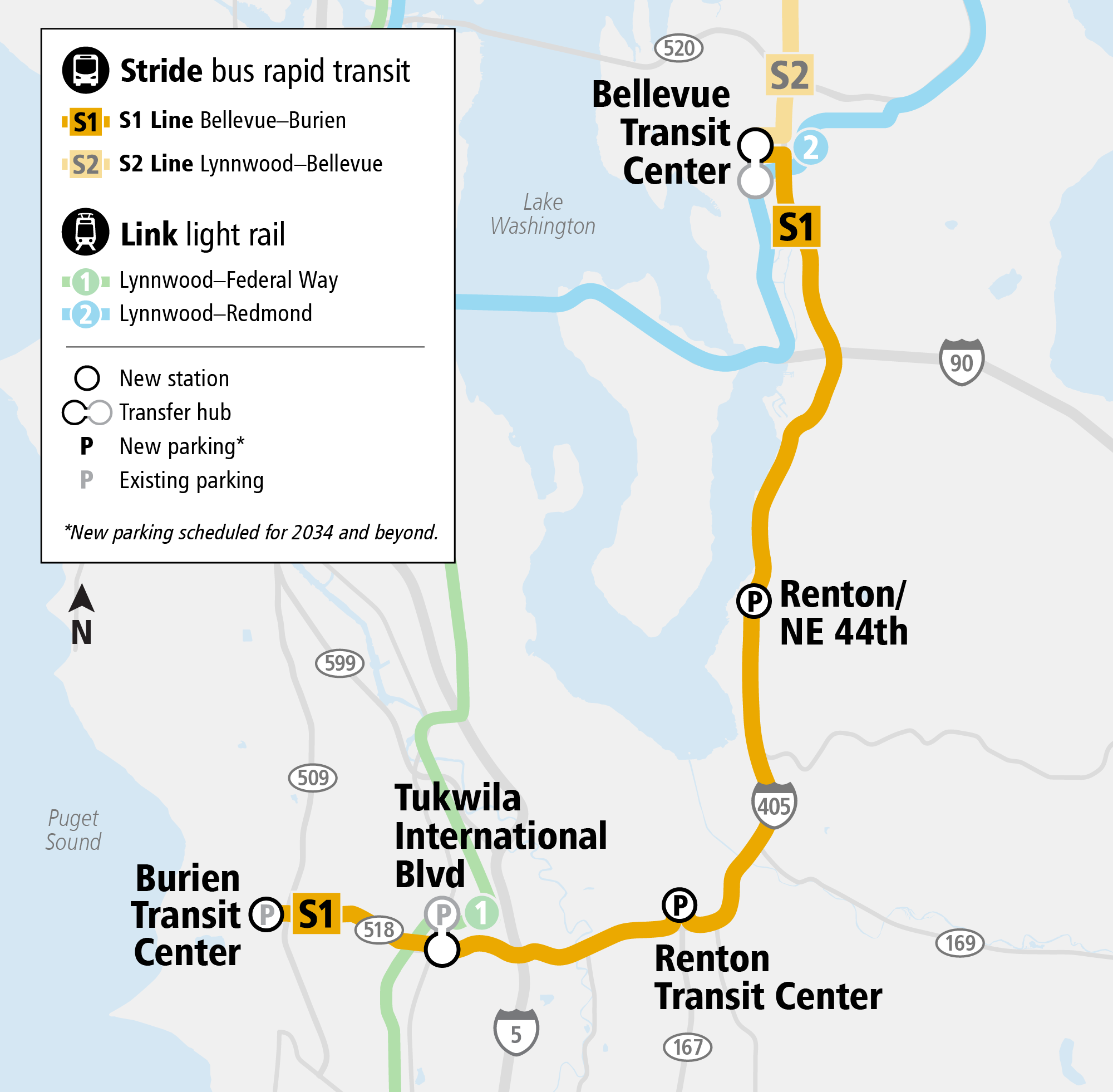
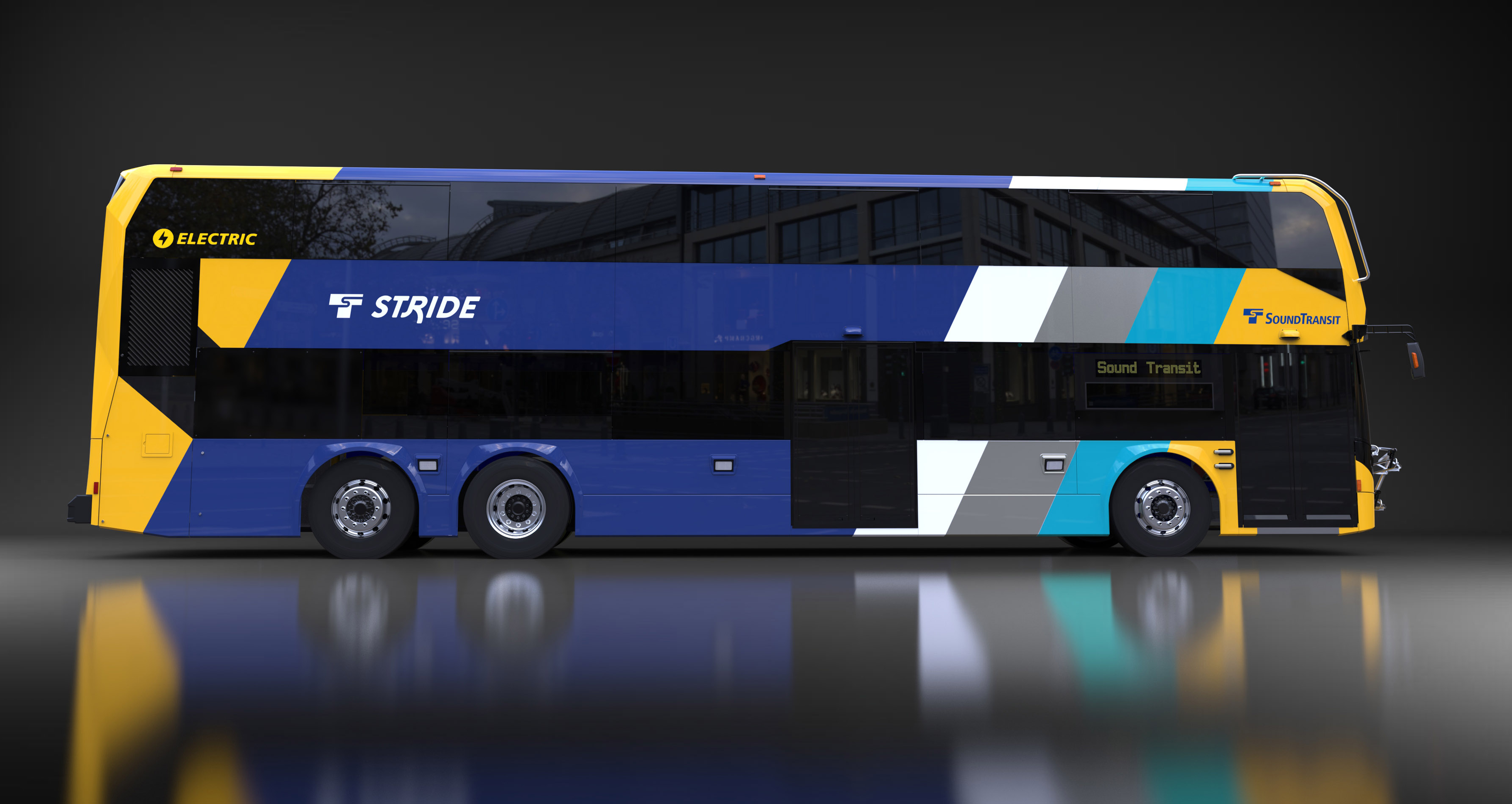
The Stride S1 Line will connect communities along I-405 and SR 518 from Bellevue to Burien. Like all Stride routes, buses on the S1 Line will run every 10 to 15 minutes, 17+ hours per day, seven days a week. The S1 Line will connect to Link light rail stations at the Bellevue Transit Center, above the Bellevue Downtown Station, and Tukwila International Blvd Station. The S1 Line will provide seamless transfers to transit services provided by Sound Transit, and King County Metro. The Stride S1 and S2 fleets will consist of double-decker battery-electric buses, as shown in the graphic below.
The project will build five Stride stations, including a new transit center in Renton.
As part of the Washington State Department of Transportation (WSDOT) I-405 Master Plan, the S1 Line will benefit from highway improvements for faster travel. In partnership with WSDOT, we aim to improve community safety, transit access, and the travel experience within the I-405 corridor. WSDOT and partner projects in the region are building portions of the Stride system to invest in transportation and pedestrian improvements ahead of Stride service beginning.
Moving the Renton Transit Center
Sound Transit will relocate the Renton Transit Center, building it adjacent to the existing Renton Park-and-Ride at Rainier Ave S and S Grady Way. This location will better serve regional S1 Line and local King County Metro bus services. Sound Transit and King County will share more information about the service changes and how routes will change from the transit center’s current site in Downtown Renton to its new site next to the Renton Park-and-Ride when we get closer to the S1 Line start of service, anticipated for 2028.
Sound Transit, King County Metro, and the City of Renton have coordinated closely throughout the S1 Line project’s development to ensure that the new Renton Transit Center serves the needs of local and regional transit riders.