Design
Project teams gather public input at design milestones, typically at 30%, 60%, and 90% design completion.
As a project advances, architects and engineers transition their focus from what we should build (what a project looks like and how it will operate) to how. Field work informs these decisions — such as testing soil conditions and ground water levels, surveying, and locating utilities.
The design phase is where cost-saving opportunities and efficiencies often emerge. For example, these might be found through refining or standardizing station designs, adjusting the light rail guideway, limiting property acquisitions, or reconfiguring trackwork.
During the design phase, Sound Transit also:
Acquires permits from local jurisdictions, including land use approvals, noise variances, storm water discharge, and wetland impacts. A light rail project requires separate permits from each jurisdiction through which it travels, and the Sound Transit district includes more than 50 different jurisdictions across our region.
Obtains private property and easements. This may include relocating businesses and/or residents. Learn more about Sound Transit’s property acquisition process here.
Works with the public to select artists for permanent art installations within the project. The STart program uses 1% of construction budgets, as identified in each voter-approved capital initiative, to bring locally and nationally recognized artists' work into stations and transit centers.
Sound Transit issues some contracts as “design-build,” which means that a single contractor is responsible for both final design and construction. Under these contracts, design and construction often overlaps rather than being sequential.
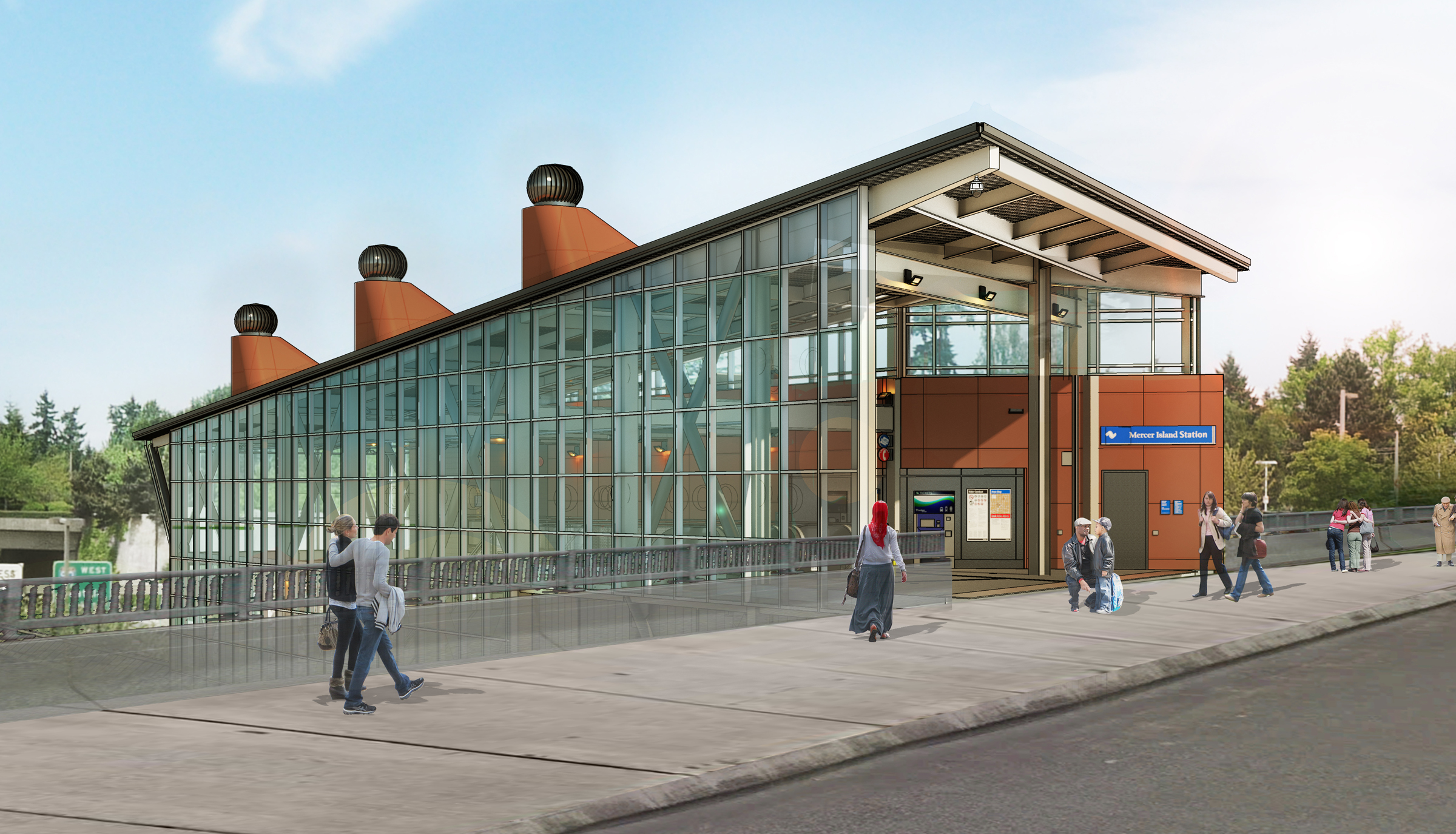
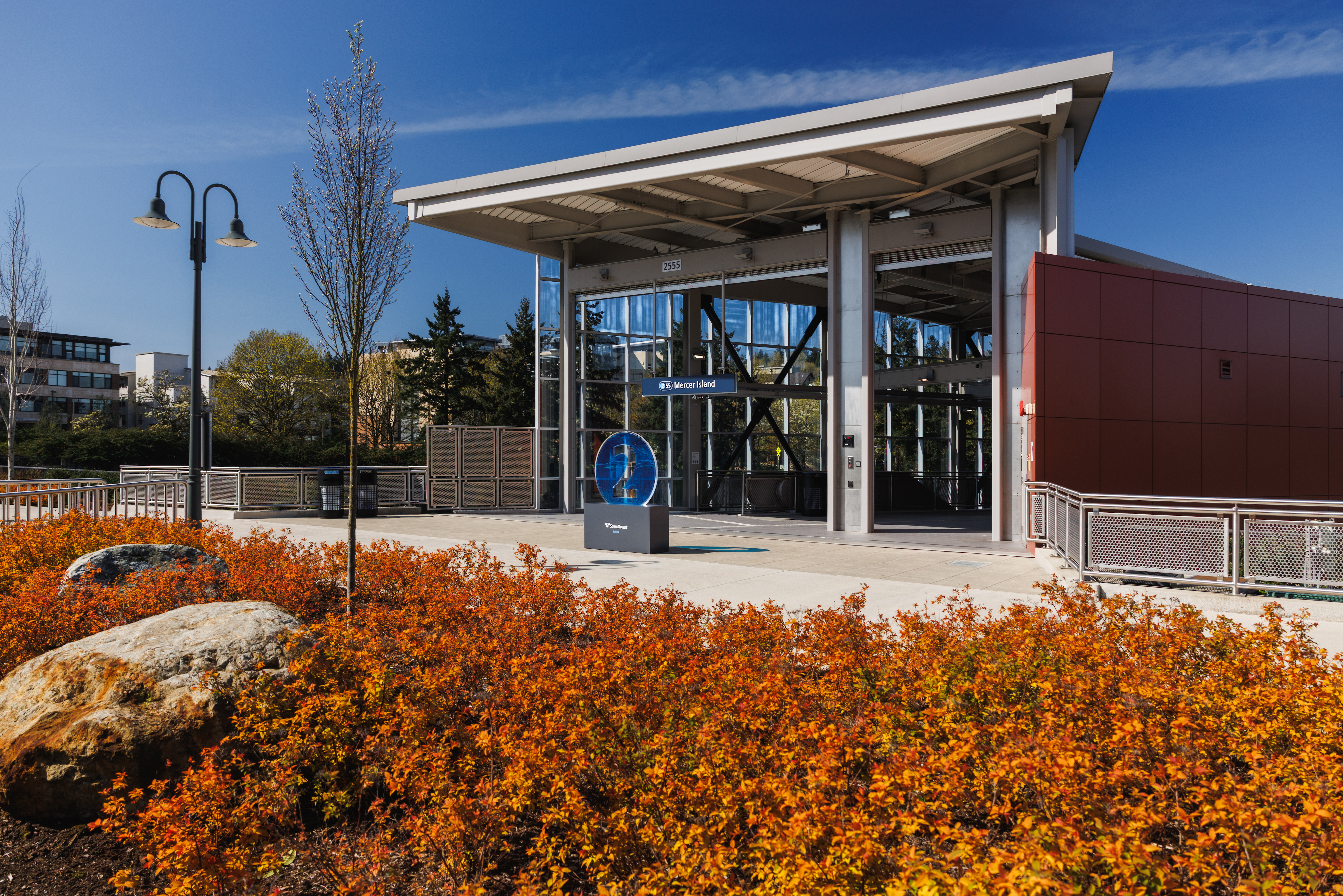
Use the slider to compare an artist’s illustration from the design phase (left) with the finished Mercer Island Station, which opened in 2026 (right).