Your express stop for the latest Sound Transit news

Behind the budget: Sound Transit’s 2027 spending priorities
How we’re funding service improvements and system growth in the year ahead, with a balanced outlook beyond 2050.
Making sense of government budgets can be confusing, so let’s break down the $3.9 billion plan for 2027 approved by the Sound Transit Board today — and how it fits into an affordable outlook well into the future.
First and foremost, Sound Transit’s 2027 Budget prioritizes three critical investment areas: 1) providing a safe, clean, reliable experience on our current services, 2) delivering more voter-approved transit projects across the region, and 3) taking great care of our existing infrastructure.
Putting our passengers first
Our riders are our priority, and they deserve a consistently excellent experience onboard and at our stops and stations.
The agency’s modal operating budget for 2027 ($942 million) supports that commitment. In addition to funding daily service on all our modes, it includes:
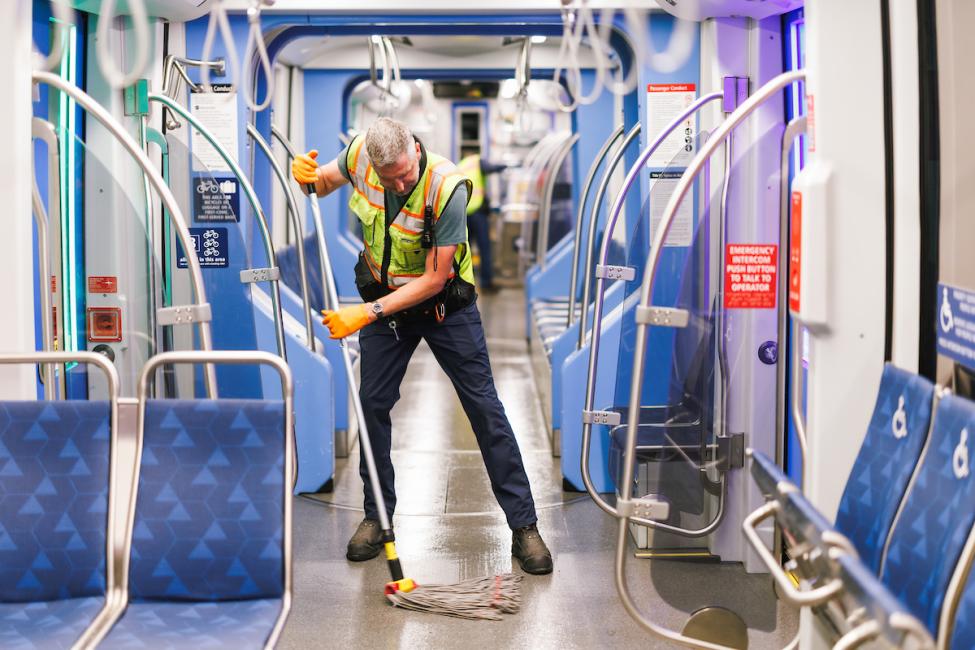
Continued investments in the Safe, Clean, and Welcoming Ride Initiative that build on the standards we established in 2026, including new autonomous cleaning technology pilots.
High-visibility fare ambassadors and security personnel, including a 10% increase in King County Sheriff officers.
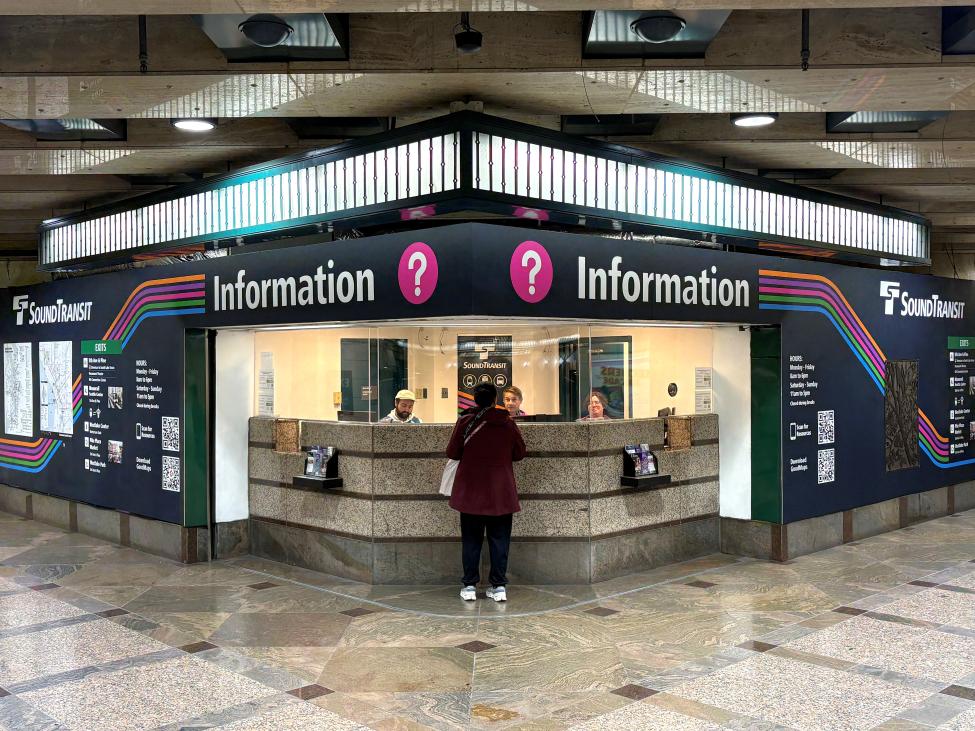
Expanded customer information booth hours at Westlake (Sound Transit’s busiest light rail station; we re-opened the booth this year).
Dedicated Amtrak vehicle maintenance personnel for our Sounder train fleet.
More resources to improve Link system reliability, rapid response, and maintenance coverage.
We are also investing in better ways to track systemwide safety. Better data reporting helps create stronger feedback loops so we can build momentum based on emerging positive trends.
From January through September of this year, for example, we’ve seen passenger injuries reduced by 32%, transit worker assaults down 21%, and collisions at at-grade crossings down 10%.
Expanding the system
Puget Sound residents have repeatedly voted to support expanding regional transit, and the agency’s annual budget includes major investments to keep that transformational growth on track.
Capital project spending will total $2.3 billion in 2027, including:
Opening three new Sounder parking garages in Sumner, Kent, and Auburn.
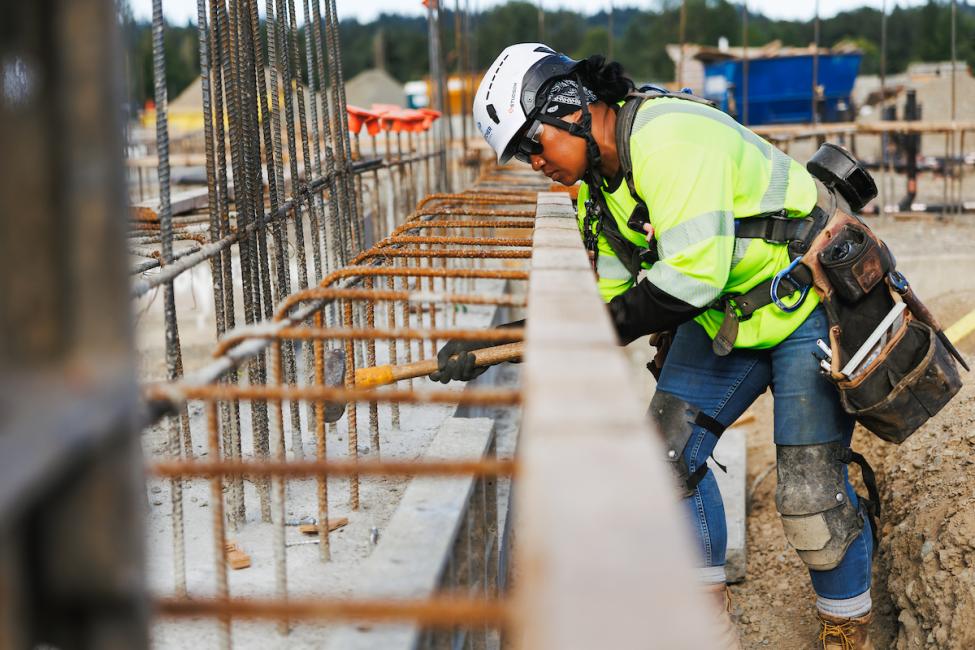
Construction on three new Stride Bus Rapid Transit lines along I-405 and SR-522, opening in 2028 and 2029. We expect to reach the “substantial completion” milestone on transit centers in Renton and Burien and the new Bus Operations and Maintenance Facility in Bothell in late 2027.
Completing design and starting early construction activities on the future Operations and Maintenance Facility South in Federal Way.
Work to meet important project deadlines on several light rail projects, including advancing the West Seattle Link Extension to final design, and publishing Final Environmental Impact Statements for the Ballard, Everett, and Tacoma Dome Link Extensions.
Sound Transit’s 2027 Budget also reflects priorities and direction the Board laid out when updating the ST3 System Plan in May.
New projects established by that action and funded in the Transit Improvement Plan (which consolidates the multi-year authorized budgets for all of our active projects, including past actuals and future spending, through 2032) include:
$10 million allocated to Renton Transit Center garage to advance preliminary engineering.
$28.5 million allocated to High-Capacity Transit Studies to complete corridor and long-range planning studies.
$33 million allocated to the Regional Parking fund to activate public private partnership opportunities and prepare for partner agency requests.
Taking great care of our assets
Transit industry wonks like to talk about “asset lifecycle management,” which is jargon for hands-on upkeep of our transit vehicles, our stations, and every bit of technology, equipment, and infrastructure needed to deliver service.
Sound Transit now has more than $18.5 billion worth of assets in service (a 40% increase between 2022-2025), and we’re committed to taking great care of them. That includes preservation of all our trains and buses, plus systemwide facilities and structures, perhaps most notably the I-90 corridor bridges and tunnels that opened for 2 Line service this year.
The result of this work is passengers getting to their destinations safely and reliably, every day.
The 2027 budget honors this expectation by dedicating $221 million toward priorities like:
Strengthening systemwide resiliency by modernizing traction power electrification, adding backup generators, improving system integration, and installing remote monitoring.
Upgrading elevators and escalators at multiple stations.
Continuing progress on modernizing downtown Seattle’s transit tunnel to ensure more reliable service on the 1 and 2 Lines. This work includes replacing the aging high-voltage feeder cables that power Link trains, plus upgrading emergency ventilation systems and access control.
Making safety improvements at at-grade crossings along the 1 Line, including final design of pilot pedestrian gates at Othello and Columbia City stations, preliminary engineering for pilot pedestrian gates at Rainier Beach, and the installation of pilot pedestrian gates at the Royal Brougham crossing.
Prioritizing long-term financial stability
As always, next year’s budget also prioritizes fiscal responsibility by including $425 million to meet Sound Transit’s debt service commitment and other related expenses.
Managing debt and credit responsibly is a top priority for Sound Transit, because it helps local taxpayer dollars go further.
Earlier this year, the Board approved refunding $205 million in 2016 bonds backed by sales taxes and motor vehicle excise taxes for a more favorable interest rate on the debt, decreasing debt service costs by about $23 million in 2026 dollars. As part of the debt refunding process, credit rating agencies S&P, Fitch, and Moody’s re-assessed Sound Transit at levels that will ensure the lowest possible borrowing costs for future debt issuance.
We’ve talked a lot about long-term affordability over the past year as staff and boardmembers worked together on the Enterprise Initiative, a rigorous revaluation of Sound Transit’s capital program and operations to maximize financial stability.
A major milestone in the effort came in May, when the Board updated the ST3 System Plan to address a future funding gap of about $34.5 billion, which we’d projected to begin in the 2030s.
So today’s adoption of the 2027 Budget and Transit Improvement Plan didn’t happen in isolation; the Board directed and staff affirmed that both conform to our affordable Long-Range Financial Plan — the agency’s forecast of spending through 2052, the full life of the voter-approved ST3 program.
“The adoption of the 2027 budget is the culmination of an incredible amount of hard work, collaboration, and thoughtful decision-making by Sound Transit staff and the Board,” said Board Chair and Snohomish County Executive Dave Somers.
“We also appreciate the extensive public input that guides all of Sound Transit’s decision-making. Through our Enterprise Initiative and continued focus on delivering projects, improving efficiency, and being good stewards of public dollars, we are putting Sound Transit on a positive track for the future,” Somers continued. “This budget reflects our commitment to delivering on the promise of transit for the communities we serve and building a stronger, more connected region.”
When it comes to managing taxpayer dollars, Sound Transit has built a strong reputation for financial stewardship. The agency has consistently earned clean audit opinions from both independent financial auditors and the State Auditor’s Office.
You can expect to hear more in 2027 about how Sound Transit is keeping ST3 capital projects moving forward, prioritizing the delivery of safe, clean welcoming rides across our system, and managing controllable costs.
Be sure to follow us on social media so you never miss an update, or sign up to receive project emails via the field at the bottom of our website.