Your express stop for the latest Sound Transit news

Fare gates are coming to many Link stations
In the years ahead, we’ll be retrofitting fare gates at up to 14 stations through a new pilot program to improve farebox recovery.
Link light rail is not only growing; it’s growing up.
On Thursday, Aug. 27, the Sound Transit Board approved a pilot program to install and test fare gates at up to 14 stations on the Link 1 and 2 Lines, a practical move that aligns our transit system with other world-class systems across the globe.
In our light rail system’s infancy, Link stations were designed without fare gates or turnstiles, relying instead on passengers having proof of payment — a common fare structure for transit systems with street-level stations, including Portland MAX, Denver RTD, Phoenix Valley Metro, Dallas DART, Minneapolis METRO, and the San Diego Trolley.
For years, this proof-of-payment system worked well for Link, which was initially a relatively small system serving many street-level stations. Board-requested studies in the past indicated that the cost of installing fare gates would be greater than the fare revenue they could recover.
Why fare gates now?
As the Link network has grown and matured to become a system of more than 60 miles and 50 stations (and with 39 more stations to come with ST3 expansions to West Seattle, Everett, Tacoma, Ballard, and Issaquah), the Board asked the agency to take a fresh look at whether the proof-of-payment system is still the best fit.
A new implementation study published earlier this year determined that fare gates make financial sense now that the Link system has expanded. Specifically, estimates show a breakeven point for capital and operational expenses at around two to three years after fare gate implementation.
Beyond the breakeven point, the study showed fare gates have the potential to significantly increase fare compliance rates and fare revenues.
Sound Transit Board policy states that farebox revenue must recover a specified percentage of operating costs, also known as “farebox recovery.” For Link light rail, the agency’s farebox recovery target is 22%, and meeting that goal is important as we face continuing cost pressures.
Sound Transit’s preliminary assessment, which models three different scenarios, estimates that fare gates can ultimately increase net revenues from fares by $32.8 million to $82.7 million per year.
Some other transit agencies, experiencing similar post-pandemic downward trends in fare compliance, have recently implemented fare gates. Systems including SEPTA, BART, LA Metro, and New York MTA improved their fare recovery rates and saw additional benefits to passenger experience, including increased safety and cleanliness, clearer wayfinding, consistency with other systems, and metering and crowd control for large events.
Sound Transit will study these metrics during the pilot to determine whether fare gates provide similar benefits here.
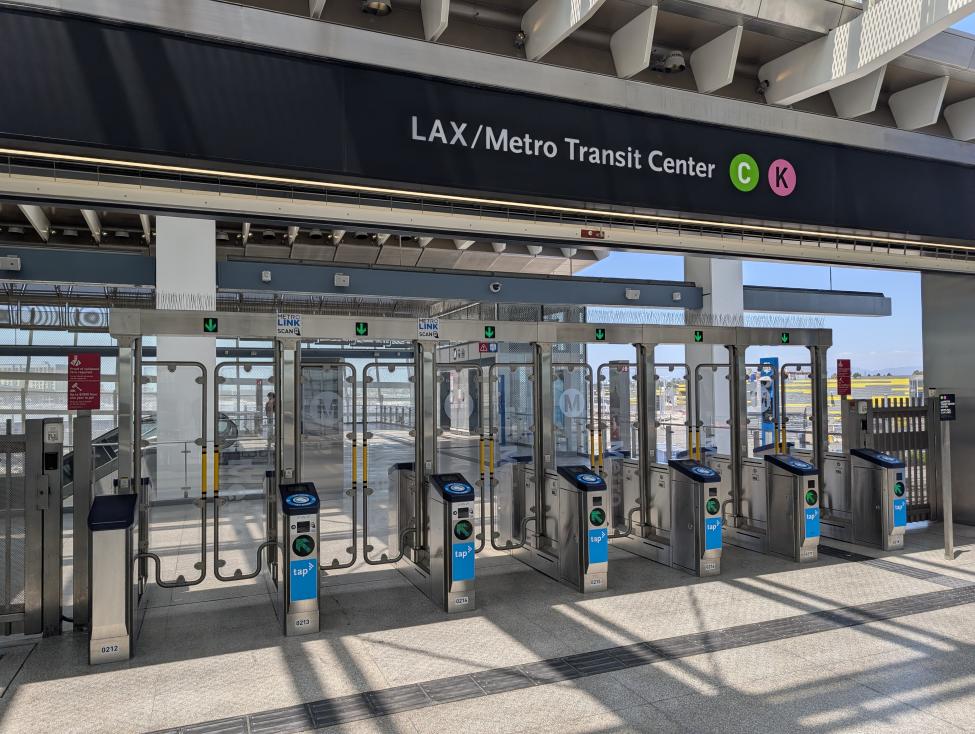
A major shift
In the first phase of the pilot, Sound Transit will need to address challenges we haven’t had to consider before, like ensuring ADA compliance and accessibility in fare gate designs.
We’ll also focus on specific considerations for people who might need new fare media, like passengers who qualify for reduced fare permits, youth, and other riders who don’t currently have it.
While adding fare gates will require behavior change by Sound Transit passengers, they’ll also help to clear up confusion regarding when and where passengers need to pay for their ride.
What happens next
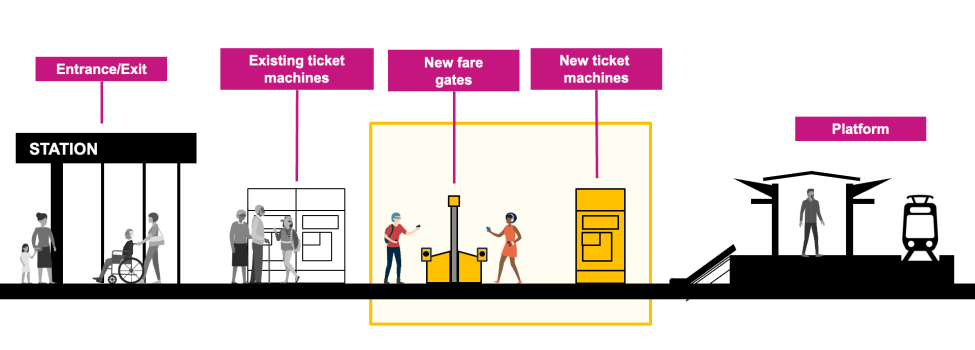
Now that the pilot is approved, Sound Transit will begin the contracting process to manufacture, deliver, and install gates at up to 14 stations on the 1 Line and 2 Line.
All of this will take a few years to develop. Installation for the fare gates is currently targeted for around 2029–2030.
Simultaneously, the agency will be working to develop public engagement strategies and technology solutions to support the fare gate rollout. To ensure informed decision-making around whether to continue, modify, or expand the pilot, staff will present a comprehensive Fare Gate Pilot Evaluation Framework, including specific goals and metrics, for Board for approval by the end of 2027.
For more details, including which stations we’re targeting for fare gate installation and frequently asked questions, visit our Fare gates pilot program page.
We’ll be sharing more information in the months ahead, so stay tuned for updates and our email list sign-up, coming soon.